

HAND – CONTENT 01
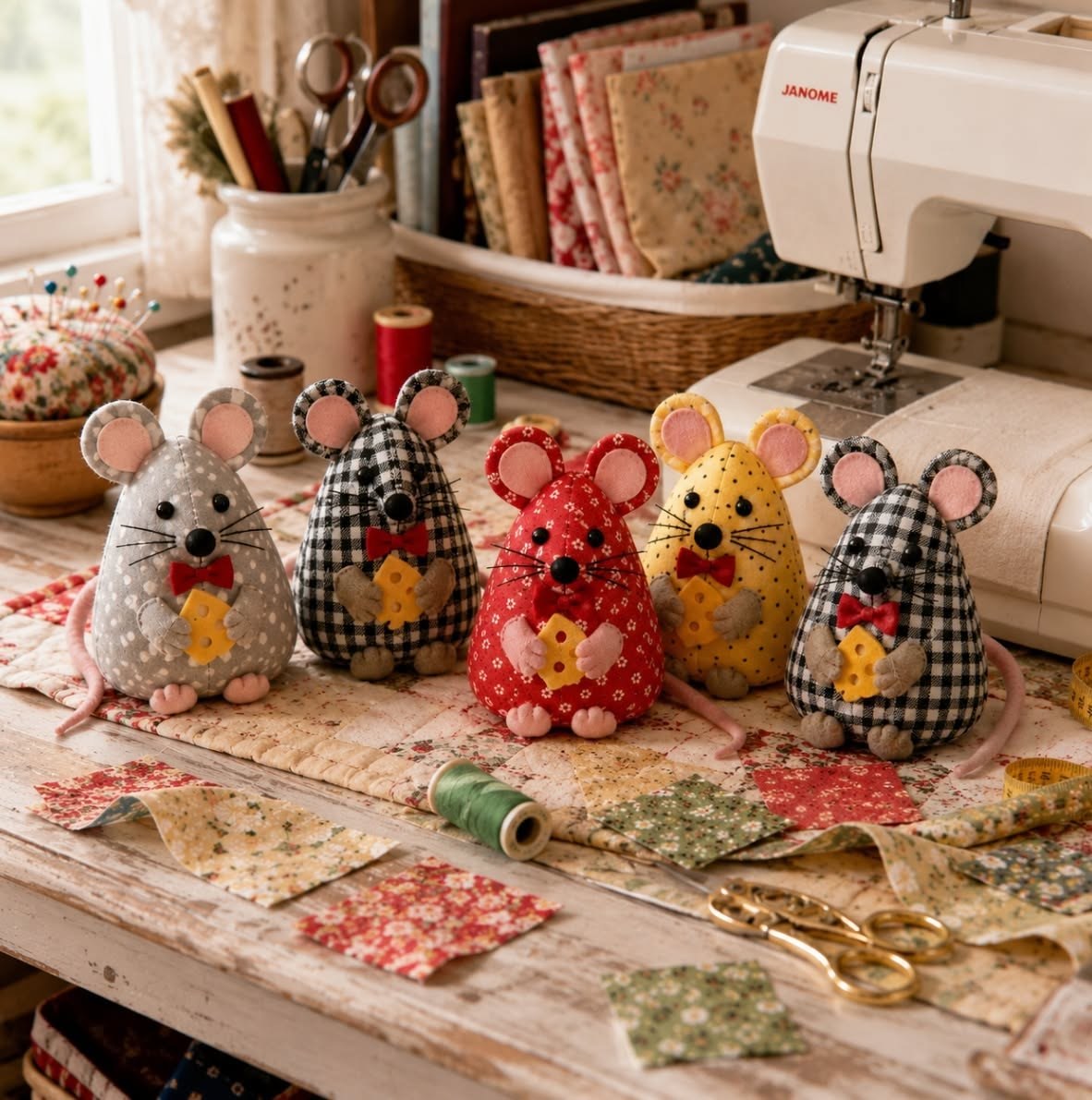
Patchwork mice are charming little fabric creations that bring a playful handmade touch to your home. Made from colorful fabric scraps, these tiny mice are a wonderful way to turn leftover materials into decorative pieces, gifts, ornaments, or seasonal displays.
Their simple silhouettes make them approachable for crafters of different skill levels, while the patchwork construction gives every mouse its own personality.
HAND – CONTENT 02
Mixing prints, textures, and colors can create an entire collection of mice that look coordinated without being identical.

Why Make Patchwork Mice?
SEE MORE PATTERNS
One of the best things about a patchwork mouse project is its versatility. Small fabric pieces that might otherwise be forgotten in your scrap box can become the main attraction.
These mice can be used as:
- Decorative accents for shelves and tables
- Handmade gifts for friends and family
- Nursery or children’s room decorations
- Seasonal decorations
- Handmade ornaments
- Cute additions to craft fairs
- Charming pincushion-style decorations
- Part of a larger farmhouse or cottage-inspired display
Because they are small, they can also be completed relatively quickly compared with larger patchwork projects.
HAND – CONTENT 03
Choosing Your Fabrics
Fabric selection is where much of the personality comes from. A patchwork mouse can be made from coordinated cotton prints, vintage-inspired fabrics, florals, ginghams, stripes, or colorful scraps.
Try combining a small-scale print with a solid fabric for balance. If you prefer a more whimsical appearance, mix several contrasting prints.
For a softer and more traditional look, consider:
- Floral cottons
- Small checks
- Polka dots
- Neutral solids
- Tiny geometric prints
- Vintage-style fabrics
Using scraps from previous projects can also make each mouse meaningful, especially when the fabrics come from quilts, clothing, or other handmade pieces.
Materials You May Need
Although the exact requirements depend on the particular pattern and desired finish, a typical project may use:
- Assorted fabric scraps
- Coordinating thread
- Sewing needle or sewing machine
- Fabric scissors
- Pins or clips
- Stuffing or fiberfill
- Embroidery thread
- Small beads or buttons for details
- A fabric marker
- Ribbon or other decorative trims
If the mouse will be used around young children, choose securely attached or embroidered details rather than small loose pieces.
Creating a Patchwork Look
The patchwork effect can be subtle or dramatic. You can construct the mouse from several fabrics or use one primary fabric and add smaller contrasting sections.
A particularly attractive approach is to use one fabric for the main body and another for the ears, nose, tail, or decorative details. This creates visual contrast without making the finished piece look too busy.
For a more traditional patchwork appearance, use several scraps with similar colors but different patterns.
Adding Character With Details
Small details can completely change the personality of a fabric mouse.
Embroidered eyes create a soft handmade appearance, while tiny buttons or beads can produce a more decorative effect. A little embroidered nose can make the face especially expressive.
You can also experiment with:
- Whiskers
- Tiny bows
- Embroidered cheeks
- Contrasting ears
- Decorative tails
- Small collars
- Miniature flowers
- Personalized initials
The beauty of handmade decorations is that there is no need for every mouse to look exactly the same.
Filling the Mouse
Stuffing is another important part of the finished appearance. Add the filling gradually rather than placing a large amount inside at once.
A lightly stuffed mouse will have a softer, more relaxed appearance, while firmer stuffing creates a more structured decoration.
Take care to distribute the filling evenly so the body maintains its intended shape. Small amounts added gradually are generally easier to control.
Working With Fabric Scraps
This project is particularly useful for scrap management. Even very small pieces can sometimes become useful components of the design.
