

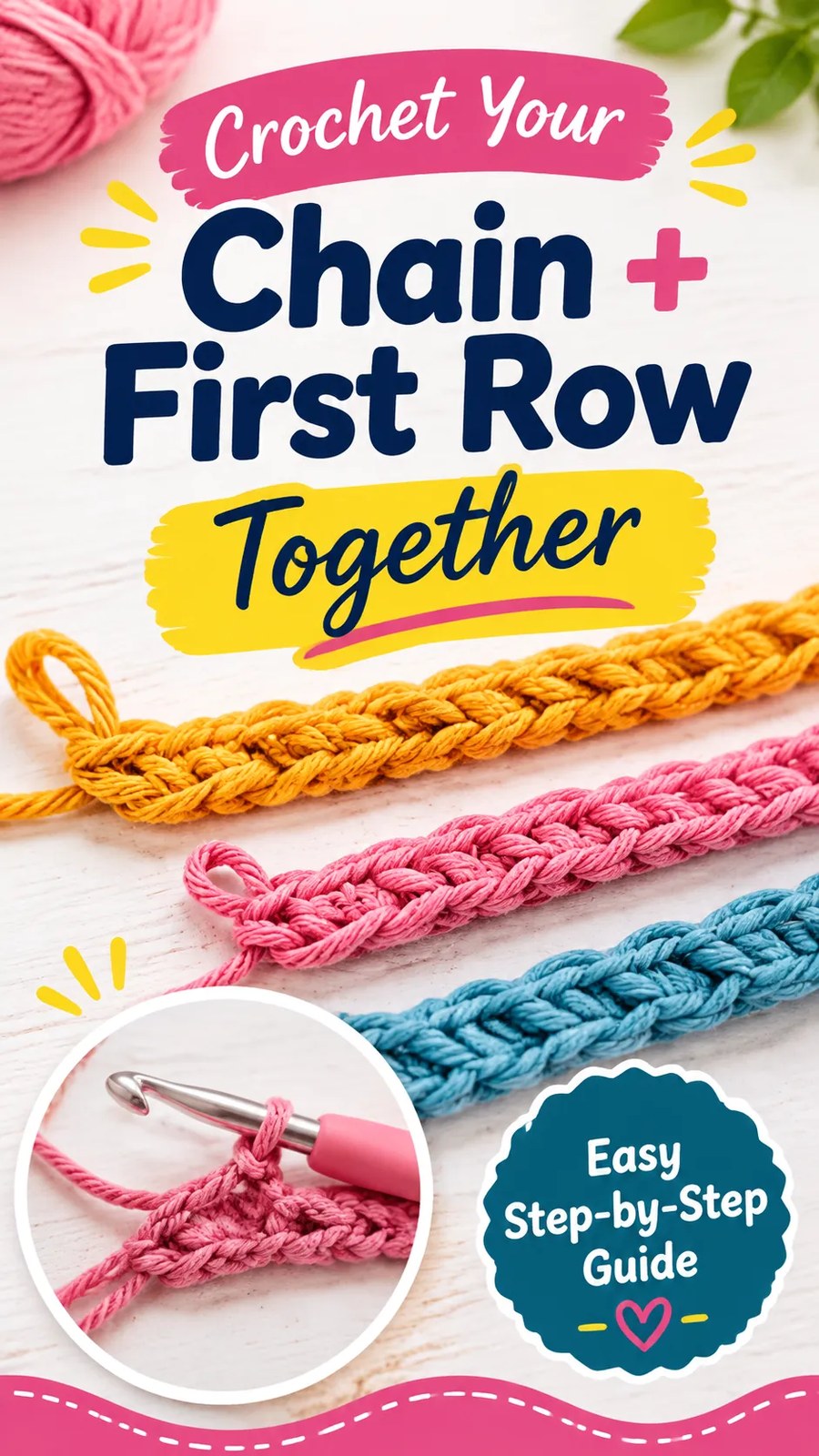
Starting a crochet project with a traditional foundation chain can sometimes feel tricky, especially when the chain twists, becomes too tight, or makes the first row difficult to work into. A wonderful alternative is the foundation single crochet stitch, a beginner-friendly technique that creates the foundation chain and first row of single crochet stitches at the same time. This method produces a neat, flexible starting edge and makes it easier to achieve consistent tension from the very beginning.
This crochet chain and first row tutorial introduces an original practice pattern inspired by the colorful crochet samples shown here. The technique creates a tidy chain-like lower edge with a row of single crochet stitches directly above it. The yellow, dusty pink, and blue examples demonstrate how attractive the foundation structure can look in different yarn colors. Whether you are learning crochet basics or looking for a more professional way to start your next project, this technique is a useful skill to add to your crochet collection.
Key Takeaways
- This project teaches the foundation single crochet technique, combining the starting chain and first crochet row.
- Suitable for confident beginners who know how to make basic chain and single crochet stitches.
- The foundation row creates a flexible, attractive lower edge without a separate starting chain.
- Medium-weight cotton or acrylic yarn is recommended for practicing the stitch structure.
- Use a 5 mm crochet hook as a starting recommendation and adjust to achieve an even fabric.
- The technique works beautifully for blankets, scarves, bags, garments, and many other crochet projects.
Understanding the Crochet Chain and First Row Together Technique
The main technique featured in this crochet project is called foundation single crochet (FSC). Instead of making a long chain and then inserting the hook into each chain to create the first row, you work both elements together in one continuous sequence.
Each foundation single crochet stitch creates two important parts. The upper portion forms a regular single crochet stitch, while the lower portion creates a small chain-like foundation loop. These two sections develop simultaneously as you work across the row.
The result is a flexible foundation that resembles a traditional chain and first row but is constructed as one integrated piece. This makes the technique particularly useful for projects where a stiff or overly tight starting edge could affect the finished shape.
What Makes Foundation Single Crochet Different?
With a traditional crochet beginning, you first create a series of chain stitches. You then turn the chain and work the first row of stitches into those chains. This approach is perfectly useful, but beginners sometimes struggle to locate the correct loops or maintain consistent tension.
Foundation single crochet removes that separate starting-chain step. You create the foundation loop and the corresponding single crochet stitch together. After the first stitch, you insert your hook into the foundation loop of the previous stitch to make the next one.
This technique creates several practical benefits:
- More flexible edges: The foundation loops allow the bottom edge to stretch more naturally.
- Improved stitch visibility: You can see the foundation loops clearly as you work.
- Less counting difficulty: You count completed foundation stitches rather than counting a long chain before beginning the first row.
- Neater construction: The integrated foundation helps reduce the appearance of uneven starting edges.
- Easy customization: You can build the foundation directly to the width required for your project.
Crochet Project Description and Stitch Texture
This project is a small crochet practice strip designed to demonstrate how a foundation chain and first row can be worked together. It is not a finished accessory or garment. Instead, it is a useful crochet technique sample that can help you understand the structure of foundation stitches before using them in larger projects.
The visible samples have an elongated, narrow shape with a raised braided appearance along the upper portion and a defined chain-like foundation underneath. The stitches are arranged in horizontal rows, producing a textured but relatively compact fabric.
The color arrangement includes warm mustard yellow, soft dusty pink, and muted blue. Each color demonstrates how the same crochet construction can create a slightly different visual impression. The twisted yarn strands and clearly defined stitch loops make the structure especially easy to study.
Recommended Yarn and Hook
A smooth, medium-weight yarn is a practical choice for learning foundation single crochet. Cotton yarn makes the individual loops easy to see and offers excellent stitch definition. Acrylic yarn is another suitable option because it is lightweight, affordable, and available in many colors.
The photographed examples appear to use a fairly substantial yarn with visible twisted plies. A worsted-weight yarn is therefore a reasonable starting recommendation for an original practice sample, although the exact fiber and yarn weight cannot be established from appearance alone.
- Yarn: Medium-weight worsted yarn, category 4.
- Fiber: Cotton, cotton blend, or smooth acrylic.
- Hook: 5 mm crochet hook, US H-8.
- Texture: Defined, slightly raised single crochet stitches.
- Construction: Foundation row followed by standard crochet rows.
Skill Level and Best Uses
This is a beginner-friendly crochet project, especially for someone who already understands how to hold a crochet hook, make a slip knot, yarn over, and complete a single crochet stitch. The foundation technique may feel unfamiliar during the first few stitches, but it becomes easier once the location of the foundation loop is clear.
After practicing on a small sample, you can use foundation single crochet to begin many different projects, including:
- Scarves and cowls with flexible starting edges.
- Crochet blankets and afghans.
- Handmade tote bags and market bags.
- Cardigans, sweaters, and other garments.
- Dishcloths, washcloths, and kitchen accessories.
- Decorative crochet panels and textured strips.
Pro Tip:
Foundation single crochet is especially useful when your project needs a starting edge that stretches. It can help prevent the tight lower edge that sometimes causes scarves, blankets, and garments to pull inward.
Crochet Construction and Stitch Analysis
The most practical construction for recreating this type of sample is a horizontally worked crochet strip. The first row is made entirely from foundation single crochet stitches. Additional rows are then worked into the top loops of the foundation stitches to create a compact, textured swatch.
Foundation single crochet has two distinct areas that are important to recognize:
- The top V: The two loops at the top of each completed stitch form the familiar single crochet structure. The next row is worked into these loops.
- The bottom foundation loop: The small chain-like section underneath each stitch provides the foundation for the next foundation single crochet stitch.
When you make the first foundation stitch, the process begins with two chains. The first chain creates the initial foundation loop, while the remaining steps complete the first single crochet stitch. For every following stitch, you insert your hook into the foundation loop of the previous stitch rather than into a separate starting chain.
The construction is worked in rows rather than rounds. There are no separate motifs or panels, and the practice sample does not require sewing or joining. The finished fabric can remain a narrow strip for reference or be enlarged to create a useful crochet swatch.
Crochet Insight: Finding the Foundation Loop
The most important part of foundation single crochet is locating the small chain-like loop at the bottom of the previous stitch.
- Turn the foundation row slightly toward you so the bottom loops are easier to see.
- Insert your hook under the two strands of the foundation loop, not through the top V.
- After making the new foundation loop, complete the single crochet stitch normally.
Free Crochet Pattern: Foundation Chain and First Row Together
Make your own foundation single crochet practice strip with this original, image-inspired pattern. The sample combines a neat foundation edge with several simple single crochet rows, allowing you to practice the technique and understand how the stitches connect.
This original interpretation uses foundation single crochet as the integrated starting row. The finished strip is designed as a learning sample rather than an exact reproduction of any particular photographed project.
Free Crochet Pattern
Foundation Stitch Practice Strip
Project description: A narrow crochet swatch that demonstrates how to create a chain-like foundation and the first row of single crochet stitches simultaneously. The additional rows help you practice working into the top of each foundation stitch.
| Pattern detail | Recommendation |
|---|---|
| Skill level | Confident beginner |
| Finished size | Approximately 5.7 x 2.3 inches (14.5 x 5.8 cm) |
| Yarn | Worsted-weight yarn, category 4 |
| Fiber | Cotton, cotton blend, or acrylic |
| Yarn quantity | Approximately 20 to 30 yards (18 to 27 meters) |
| Hook | 5 mm, US H-8 |
| Gauge | 14 foundation single crochet stitches and 14 rows measure approximately 4 inches (10 cm) |
| Construction | Worked flat in rows |
| Terminology | US crochet terminology |
| Turning chain | Ch 1 does not count as a stitch |
| Slip stitches | Not used in the main pattern |
Materials and Notions
- 20 to 30 yards of smooth worsted-weight yarn.
- 5 mm crochet hook, US H-8.
- One yarn needle for weaving in the ends.
- Scissors.
- Measuring tape or ruler.
- Optional stitch markers for identifying the first and last stitches.
Choose a solid or lightly colored yarn for your first sample. A lighter shade makes the individual foundation loops easier to identify. Mustard yellow, dusty pink, and muted blue are attractive alternatives if you want to create a colorful set of practice strips.
Abbreviations
- ch: Chain.
- FSC: Foundation single crochet.
- sc: Single crochet.
- st: Stitch.
- sts: Stitches.
- rep: Repeat.
- YO: Yarn over.
- RS: Right side.
- WS: Wrong side.
- FO: Fasten off.
All instructions use standard US crochet terminology. The UK equivalent of a US single crochet is a double crochet, and the UK double crochet is different from the US double crochet.
Special Stitch: Foundation Single Crochet
The foundation single crochet stitch creates a chain-like base and one single crochet stitch at the same time. It is the main technique used throughout this pattern.
How to Make the First Foundation Single Crochet
- Make a slip knot and place it on your crochet hook.
- Chain 2.
- Insert your hook into the first chain from the hook. This is the chain farther away from the active loop.
- YO and pull up a loop. You now have two loops on your hook.
- YO and pull through one loop only. This creates the foundation chain loop at the bottom of the stitch. You still have two loops on your hook.
- YO and pull through both loops. You have completed your first foundation single crochet stitch.
How to Make the Following Foundation Single Crochet Stitches
- Locate the small chain-like loop at the bottom of the previous foundation stitch.
- Insert your hook under both strands of that foundation loop.
- YO and pull up a loop. You now have two loops on your hook.
- YO and pull through one loop only to create the next foundation chain.
- YO and pull through both loops to complete the single crochet stitch.
- Repeat these steps until you have the required number of foundation stitches.
Important: Each completed foundation single crochet counts as one stitch. For this pattern, the starting foundation row must contain exactly 20 stitches.
Pattern Notes and Construction
- The practice strip is worked flat in turned rows.
- Row 1 consists of 20 foundation single crochet stitches.
- Rows 2 through 8 consist of regular single crochet stitches.
- Chain 1 at the beginning of each regular row. This turning chain does not count as a stitch.
- Work the first single crochet into the first actual stitch, not into the turning chain.
- Do not join rows with slip stitches.
- Every row contains 20 stitches.
- Keep the foundation loops facing in the same direction as you work across the starting row.
Complete Row-by-Row Crochet Instructions
Foundation Row: Chain and First Row Together
Step 1: Make a slip knot and chain 2.
Step 2: Insert your hook into the first chain from the hook. YO and pull up a loop. YO and pull through one loop. YO and pull through both loops.
Step 3: Locate the foundation loop underneath the stitch you just made. Insert your hook under both strands of this loop.
Step 4: YO and pull up a loop. YO and pull through one loop. YO and pull through both loops.
Step 5: Continue making foundation single crochet stitches in the same way until you have completed 20 stitches.
Foundation row count: 20 FSC.
Lay the row flat and gently stretch it horizontally. You should see a series of small chain-like loops along the lower edge and a row of recognizable single crochet stitches along the upper edge.
Row 2: First Regular Crochet Row
Ch 1 and turn your work. The turning chain does not count as a stitch.
Insert your hook under both top loops of the first foundation single crochet stitch. Work 1 sc. Work 1 sc into each remaining stitch across the row.
Complete 20 single crochet stitches.
Row 2 count: 20 sc.
Row 3: Building the Texture
Ch 1 and turn.
Work 1 sc into the first stitch. Work 1 sc into each of the next 18 stitches. Work 1 sc into the final stitch.
